Breathing All Rights
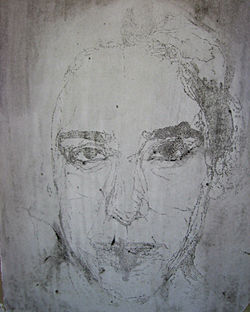
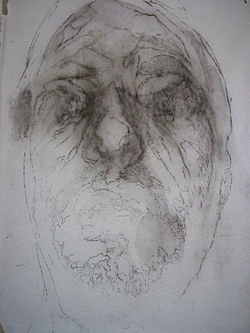
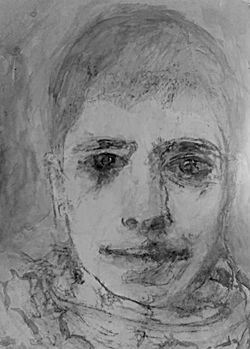
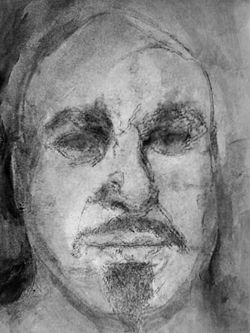
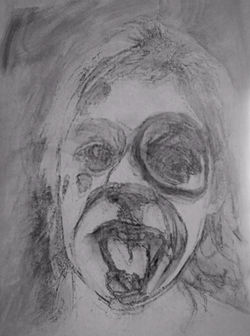
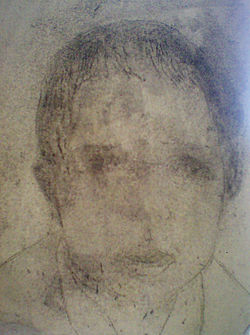
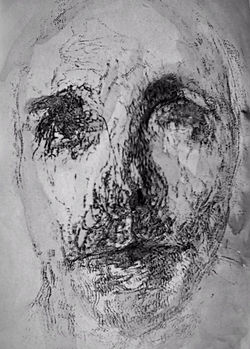
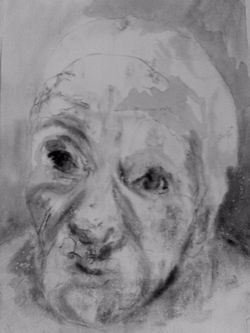
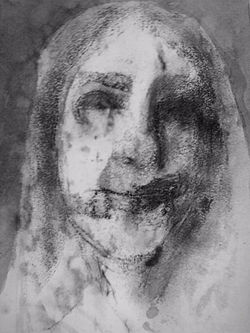
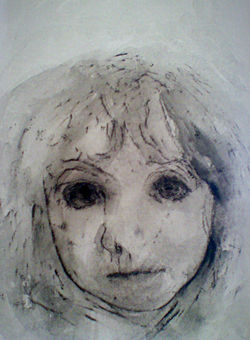
Breathing All Rights is a video work composed of a series of drawings produced in 2010. The animation brings together figures from different generations and communities, staging encounters shaped by vulnerability and power relations.
Several portraits depict elderly individuals, including Holocaust survivors, alongside their caregivers, many of whom are foreign workers. These juxtapositions reveal layered forms of dependency , physical, historical, and social shaped by age, memory, migration, and care. The encounters emphasize unequal relations while foregrounding everyday situations of support and fragility.
Some figures appear disguised, as several drawings were made during the Purim period, when costumes and masks are traditionally worn. Within this context, disguise functions as a condition of uncertainty: it remains unclear whether a figure is genuinely masked or whether the disguise reveals another layer of reality.
The video incorporates excerpts from legal and historical documents, including The Trial of Adolf Eichmann: Record of Proceedings in the District Court of Jerusalem (State of Israel, Ministry of Justice, Jerusalem, 1992), testimonies by Adolf Eichmann, and definitions of crimes against humanity from the Nuremberg Charter. These materials address war crimes, crimes against humanity, and questions of individual responsibility within systems of authority. Presented alongside the portraits, this legal language underscores the gap between bureaucratic reasoning and the human consequences of political violence.
The Eichmann trial reaffirmed principles established at Nuremberg, notably that obedience to superior orders does not remove individual criminal responsibility. The proceedings also became an important reference point in later legal and scholarly discussions concerning crimes against humanity and the prosecution of mass atrocities. The drawing series was originally titled Times of Exposures. The title refers to photographic exposure, where changing lighting conditions determine what becomes visible and what remains hidden. In a similar manner, historical narratives are shaped by conditions of visibility: some events are illuminated, while others remain obscured or erased. The work reflects on how memory and responsibility emerge unevenly across time.
Breathing All Rights (video, duration 18mn 59. 2026)
Huis-clos : Jerusalem Times of Exposure
The work is composed of three cages. The cage is modeled on the cage of the Adolph Eichmann trial. The sculpture is experienced by one viewer at a time. The viewer enters the first cage and sees portraits positioned at different spatial level that creates different possible readings and relationships. Initially the viewer does not realize he/she is in a cage. On the way out of the cage one’s can hear the original tape of Eichmann repeating that he was just an ordinary person following orders. At a lower volume the voices of the original translations in English, Hebrew as well as Arabic, French, Russian are heard albeit Eichmann voice is overriding them. One then passes a gallery of portraits seen in various relations to each other, representing the Jewish and Arab populations of Jerusalem. Only when exiting this first cage one realizes that it was the Eichmann cage. Thereafter the viewer can proceed towards the second cage external side and sees reflections of himself on the portraits reflecting surface, much as one views oneself in a mirror. The glass cage is made from transparent paper and lighting effects animate the surrounding portraits and the portrait of the viewer. The viewer hears a sound track taken from the classic Stanley Milgram psychological experiments, where in a laboratory situation; the subject causes another person to receive shocks because he is ordered/instructed to do so, even when the other subject is shouting from the pain of the shocks. The viewer exits and walks further seeing more portraits in different situations, until he arrives at another cage, which has been laid open (much as a carton box has been unfolded) and inside, in the heart of the cage is a representation of the microphone used in the Eichmann trial, symbolically waiting to be used again. The only sound heard is the static of the microphone.
The Eichmann cage represents a view of absolute evil. One looks inside the cage at the perpetrator of evil. Yet the viewer comes to see his/her own image as a shadowy reflection on the glass of the cage, the portraits represent the people of Jerusalem. The context of a person may change and under different circumstances or contexts, a person may become either a victim or perpetrator of evil. The sculpture is intended to evoke the memory of the absolute evil of Adolph Eichmann and others. Yet, it is a reminder of the relativity of evil and that something in the ordinary individual can become a reflection and expression of evil.

"Eichmann Glass Cage"
Digital picture, (2010).
 |  |  |
|---|---|---|
 |  |  |
 |  |  |
 |  |  |
 |  |  |
 |  |  |
 |  |  |
 |  |  |
 |  |  |
 |  |  |
 |  |  |
 |  |  |
 |  |  |
 |  |  |
 |  |  |
 |  |  |
 |  |  |
|  |  |
 |  |  |
 |  |  |
 |  |  |
 |  | |
 |  |  |
 |  |  |
 |  |  |
 |  |  |
 |  |  |
 |  |  |
 |  |  |
 | |  |
 |  |  |
 |  |  |
 |  |  |
 |  |  |
 |  |  |
 |
Gallery Representation: http://www.seegallery.net/
Research Affiliation: https://www.aliusresearch.org/
NeuroArts Resource Center Profile:
https://www.neuroartsresourcecenter.com/profile/france-lerner